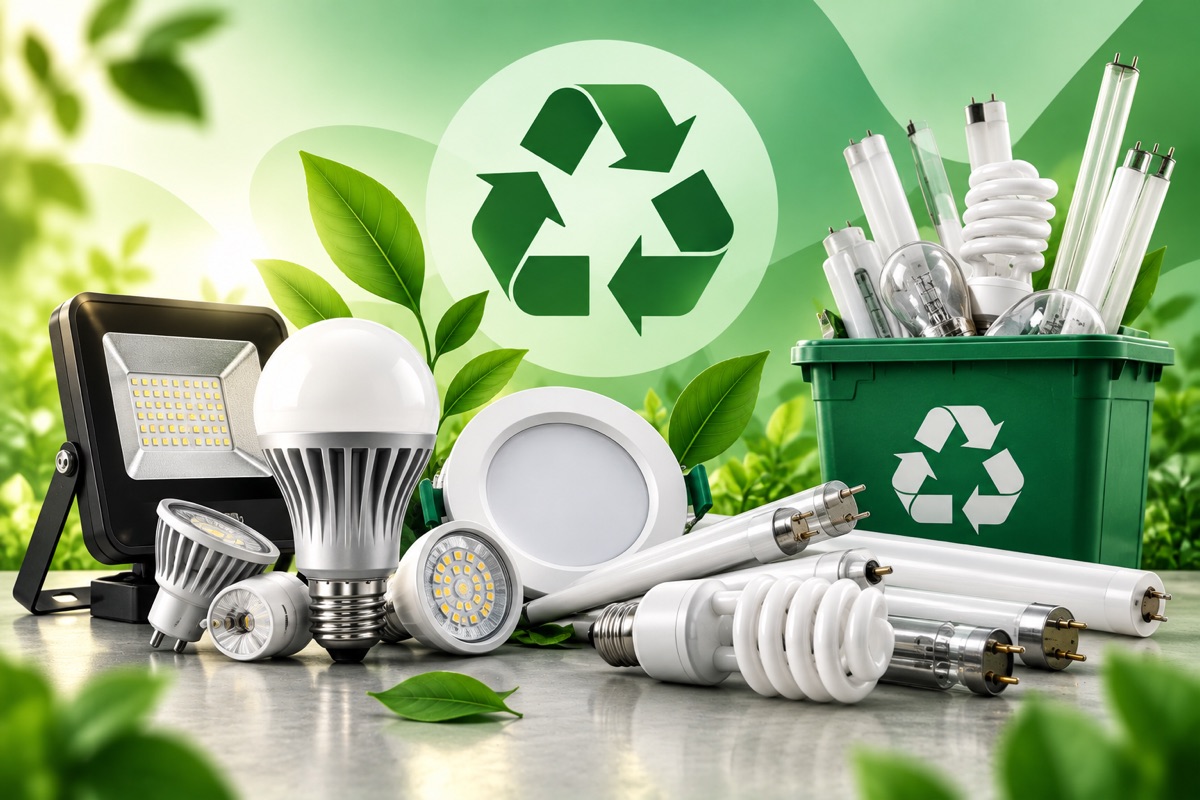
How We Recycle Lighting Equipment
Improper disposal of fluorescent tubes and CFL bulbs is a major environmental hazard due to the highly toxic mercury vapor trapped inside them. Even a small break can contaminate groundwater.
We utilize specialized negative-pressure crushing machines that safely capture 100% of the mercury vapor and phosphor dust. The remaining glass and aluminum are then cleanly separated for conventional recycling.
- 100% safe containment of toxic mercury vapor.
- Specialized collection bins provided to corporate partners.
- Recovery of clean glass and aluminum for secondary industries.
Recycling By The Numbers
Performance metrics tracked for every lighting equipment batch we process.
0
% Mercury Vapor Captured
0
Tonnes of Glass Recycled Daily
0
% CPCB-Leaf Compliant
Lighting Equipment Recovery Process
A purpose-built workflow that maximizes yield while protecting people and the planet.
Safe Bin Collection
Specialized crush-proof bins are installed at partner facilities for the safe accumulation of spent lighting.
Sealed Transport
Tubes travel in sealed, cushioned containers that remain intact in transit, preventing breakage and vapor release.
Vacuum Separation
Under negative pressure, the lumen chamber separates glass, metal caps, and phosphor powder line by line.
Mercury Distillation
Phosphor powder is thermally treated to distill and fully capture elemental mercury as a safe, saleable by-product.
Glass & Metal Recovery
Clean soda-lime glass and aluminium caps are crushed and sold to secondary manufacturing industries.
Accepted Lighting Equipment Items
Bring us anything in this category — even items you think are beyond repair.
Fluorescent Tubes (TL & T5)
CFL Bulbs
LED Lamps
HID Lamps
Sodium Vapour Lamps
Mercury Vapour Lamps
Triphospine Tubes
Neon Signage
Architectural Lighting
Automotive Lamps
Cold Cathode Tubes
Industrial Floodlights
Valuable Materials Recovered
Every commodity is refined and channeled back into the circular economy.